
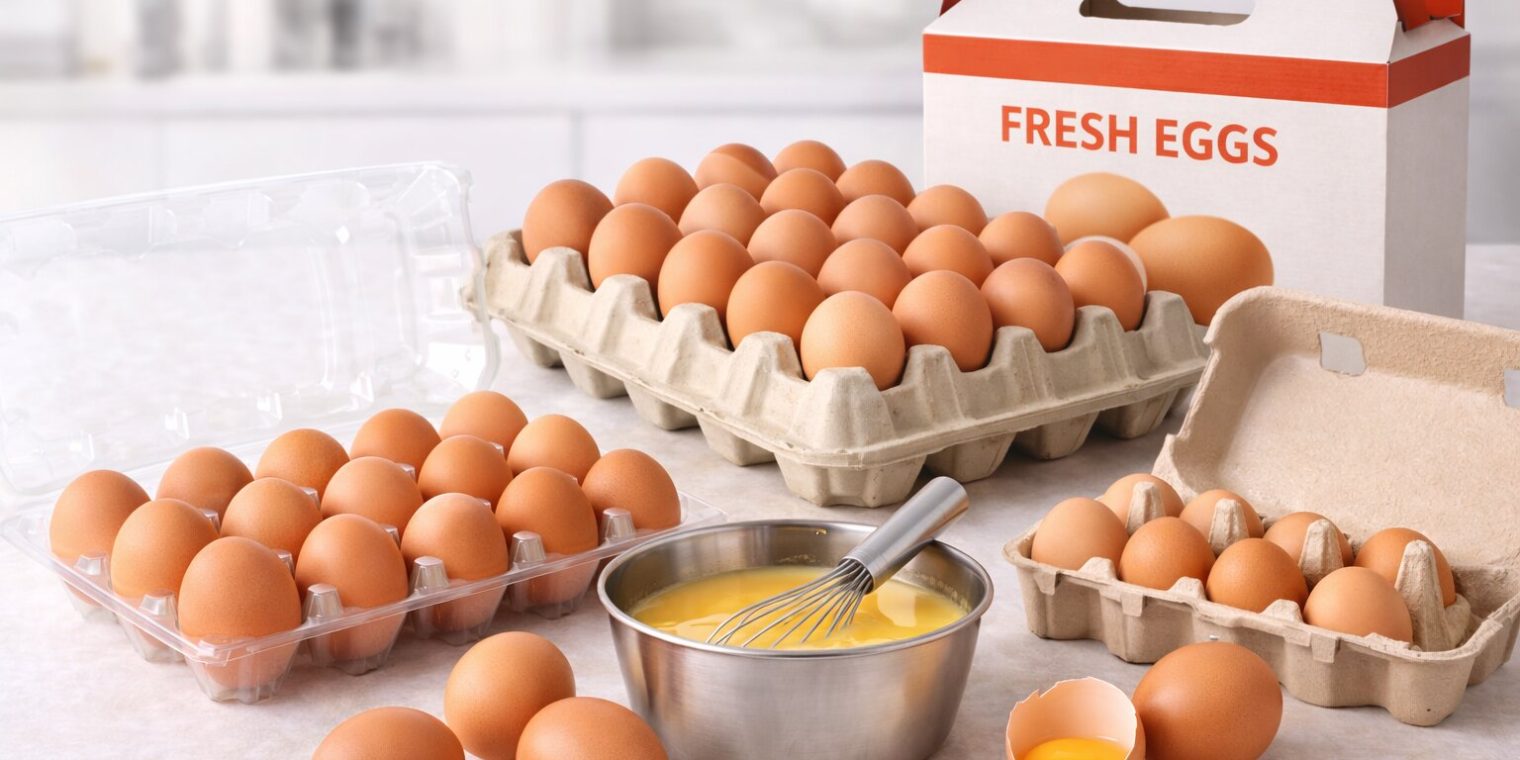
Fresh chicken eggs for retail, horeca and food manufacturers
Fresh chicken eggs remain one of the most essential and versatile ingredients in the global food industry. They are widely used by retailers, restaurants, bakeries, food processors and catering services because they combine nutritional value, functionality and affordability. For producers and distributors, maintaining consistent quality and reliable supply is critical to serving these different sectors effectively.
Chicken eggs are valued not only for their nutritional profile but also for their unique technological properties in cooking and food production. Eggs contain high-quality protein, essential amino acids, vitamins and minerals. At the same time, they perform multiple functional roles in food preparation: they bind ingredients, stabilize emulsions, create foams, add structure and contribute to texture, color and flavor. Because of this multifunctionality, eggs are used in thousands of recipes across the food industry.
In retail markets, fresh eggs are one of the most frequently purchased food products. Consumers rely on them for everyday cooking, baking and breakfast meals. For retail distribution, eggs must meet strict standards of freshness, cleanliness and grading. Producers typically sort eggs by size and quality before packaging them in protective cartons that prevent breakage during transportation and storage. Clear labeling and traceability also play an important role in retail supply chains, allowing consumers to identify the product origin and production date.
The horeca sector — hotels, restaurants and catering — depends heavily on consistent egg supply. Professional kitchens use eggs in a wide range of dishes, from breakfast menus and pastries to sauces, desserts and prepared meals. In restaurants, eggs provide essential culinary functions such as emulsifying mayonnaise and hollandaise sauces, creating airy textures in soufflés and meringues, and binding ingredients in meat or vegetable dishes. Because horeca kitchens operate at high volume and require reliable ingredients, they typically purchase eggs in bulk packaging formats that simplify storage and kitchen operations.
Food manufacturers also rely on fresh eggs as a key ingredient in many industrial recipes. Bakeries use eggs to improve dough structure, provide moisture and enhance product color. Pasta producers incorporate eggs to achieve the desired texture and flavor profile. In the confectionery industry eggs are essential for foamed products, fillings and coatings. Ready-meal manufacturers use eggs to stabilize recipes and improve mouthfeel in prepared foods.
For egg producers serving these markets, maintaining strict quality control throughout the production process is essential. Egg production begins at specialized poultry facilities where laying hens are managed under controlled conditions. Feed quality, animal health and environmental management all influence egg quality. After collection, eggs are cleaned, inspected and graded according to size and shell integrity. Only eggs that meet established food safety standards proceed to packaging and distribution.
Modern egg processing facilities use automated systems to sort and inspect eggs at high speed. Optical scanning technologies detect cracks or structural defects in shells, ensuring that only intact eggs reach the market. Eggs are then categorized by size — such as small, medium, large or extra-large — depending on regional standards and customer requirements. Consistent grading helps retailers and food manufacturers maintain uniformity in their recipes and product presentation.
Packaging and logistics also play a crucial role in preserving egg quality. Eggs must be protected from mechanical damage and contamination during transportation. Temperature control helps maintain freshness and slows natural quality degradation. Producers typically deliver eggs through refrigerated supply chains to ensure the product arrives at retail stores, restaurants and manufacturing facilities in optimal condition.
Another important aspect of egg production is traceability. Food safety regulations in many regions require producers to maintain detailed records of production batches and distribution routes. This allows quick response in the unlikely event of quality or safety concerns. Traceability systems also help build trust between producers, distributors and customers.
Sustainability and responsible production practices are becoming increasingly important in the egg industry. Producers continuously improve feed efficiency, waste management and energy use within poultry farms and processing facilities. These improvements help reduce environmental impact while maintaining stable production volumes needed to supply large food markets.
Fresh chicken eggs continue to play a central role in both traditional cooking and industrial food manufacturing. Their nutritional value, versatility and functional performance make them indispensable across retail, horeca and food processing sectors. For suppliers, delivering consistent quality, safe handling and reliable distribution ensures that this essential ingredient remains available to consumers and businesses alike.
Donec velit neque, auctor sit amet aliquam vel, ullamcorper sit amet ligula. Lorem ipsum dolor sit amet, consectetur adipiscing elit. Vivamus suscipit tortor eget felis porttitor volutpat.