
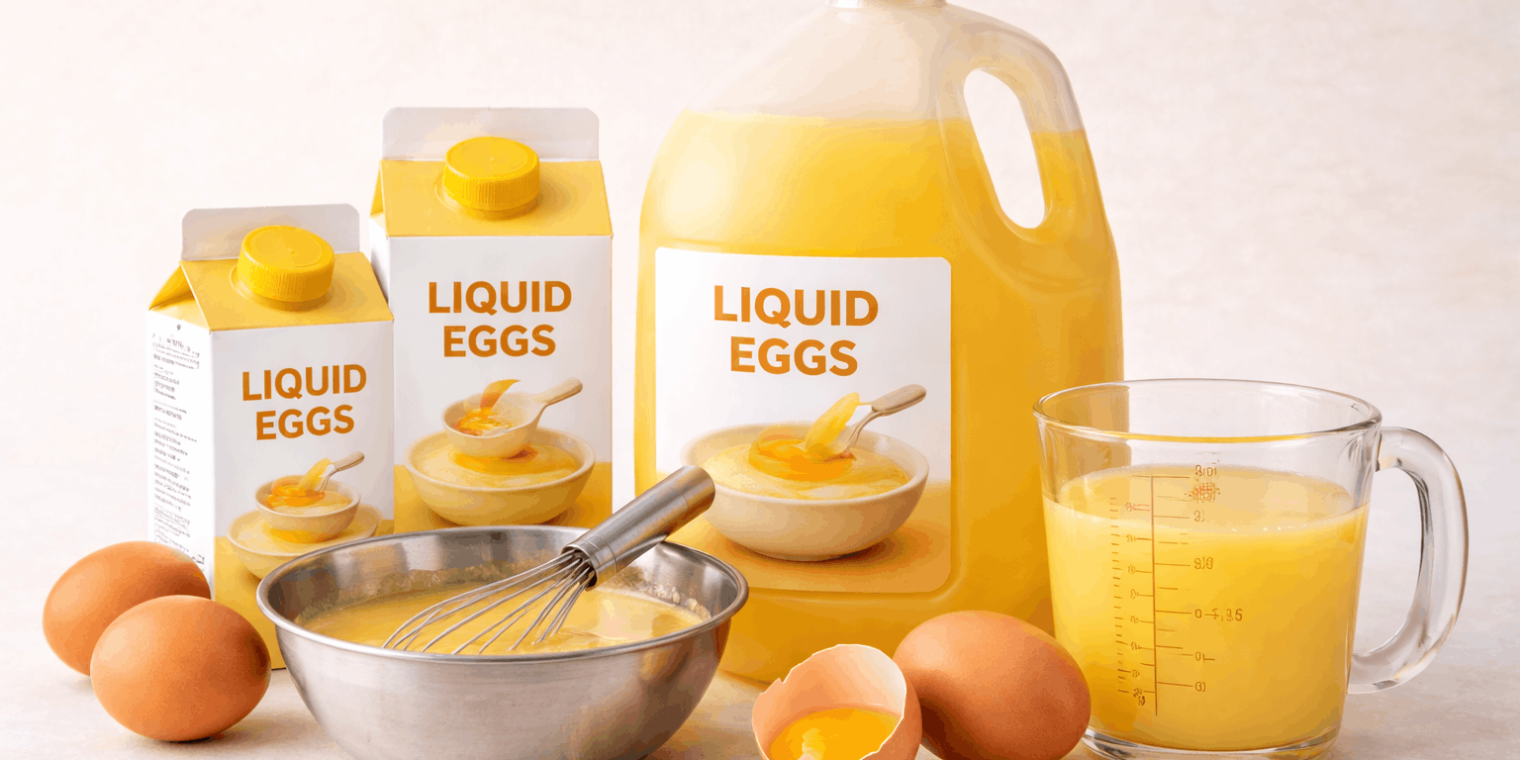
Safe and ready-to-use liquid egg products for large-scale cooking and processing
Liquid egg products have become an essential ingredient in modern food production and professional cooking. Designed for large-scale kitchens, bakeries and industrial food factories, these products provide the natural functionality of eggs in a convenient and controlled format. By removing the need to handle shell eggs, liquid egg products improve efficiency, hygiene and consistency in food preparation.
Because they are pasteurized and packaged under controlled conditions, liquid eggs offer a safe and ready-to-use solution for operations that require large volumes of egg ingredients. This makes them particularly valuable for food processors, catering companies and institutions that must maintain strict quality and safety standards.
What Are Liquid Egg Products
Liquid egg products are produced by processing fresh eggs into a homogeneous liquid form that can be easily stored, transported and used in food production. The eggs are mechanically broken and the contents are collected in hygienic processing systems. Depending on the product type, the eggs may remain whole or be separated into yolks and whites.
The liquid mixture is filtered to remove shell fragments and other impurities before entering the pasteurization stage. After pasteurization, the liquid egg is cooled and packaged in sealed containers designed for safe transportation and storage. The result is a ready-to-use ingredient that preserves the natural functional characteristics of eggs.
Pasteurization and Food Safety
Pasteurization is a critical step in the production of liquid egg products. During this process, the egg mixture is heated to a controlled temperature for a precise amount of time. This heat treatment destroys harmful microorganisms such as Salmonella while maintaining the proteins responsible for the functional properties of eggs.
Because pasteurized liquid eggs have already undergone this safety treatment, they significantly reduce the microbiological risks associated with raw shell eggs. This makes them particularly suitable for environments where food safety is a priority, including large catering operations, hospitals, schools and food manufacturing facilities.
Convenience for Large-Scale Food Production
One of the most important advantages of liquid egg products is operational efficiency. In traditional food preparation, large kitchens must break, separate and measure large numbers of eggs manually. This process requires time, labor and careful handling to avoid contamination.
Liquid egg products eliminate these steps. The ingredient arrives ready to use and can be easily poured, pumped or dosed into mixing systems. This simplifies production workflows and allows kitchens and factories to operate more efficiently.
In industrial environments, liquid eggs can be integrated directly into automated production lines. The product can be delivered through pipelines or dosing equipment that ensures precise ingredient control. This level of automation improves consistency and reduces the risk of human error during production.
Applications in Professional Kitchens
Professional kitchens rely on eggs for many culinary functions, and liquid egg products support these applications at large production volumes. Breakfast dishes such as omelets and scrambled eggs can be prepared quickly using liquid whole eggs. Sauces and dressings benefit from the emulsifying properties of egg yolks, while egg whites are used to create foams in desserts and baked goods.
Catering companies and hotels often prefer liquid eggs because they simplify food preparation and reduce waste. Instead of managing fragile shell eggs and disposing of shells, kitchens receive a clean ingredient that can be stored and measured efficiently.
Use in Food Manufacturing
Food factories use liquid egg products in a wide variety of processed foods. Bakeries incorporate them into batters and doughs where eggs contribute structure, color and moisture. Ready-meal producers rely on egg ingredients to stabilize recipes and improve texture. In sauce manufacturing, egg proteins help emulsify oil-based mixtures, creating smooth and stable products.
Because liquid eggs are processed under standardized conditions, they provide consistent performance in large production batches. This reliability helps manufacturers maintain uniform product quality across different production cycles.
Packaging and Storage
Liquid egg products are typically packaged in containers designed for commercial food production. Common packaging formats include cartons, bag-in-box systems and large industrial containers. These packages allow for easy pouring or connection to pumping systems in manufacturing environments.
Refrigeration is required to maintain freshness and preserve product quality. When stored under proper temperature conditions, pasteurized liquid eggs maintain their functional characteristics for an extended period while remaining safe for use in food production.
Conclusion
Safe and ready-to-use liquid egg products provide a practical solution for large-scale cooking and industrial food processing. By combining the natural performance of eggs with modern pasteurization and packaging technology, these products support efficient and hygienic food production. Their convenience, safety and consistent functionality make liquid egg products an essential ingredient for professional kitchens and large food manufacturing operations.