Long-lasting egg solutions for food production and professional use
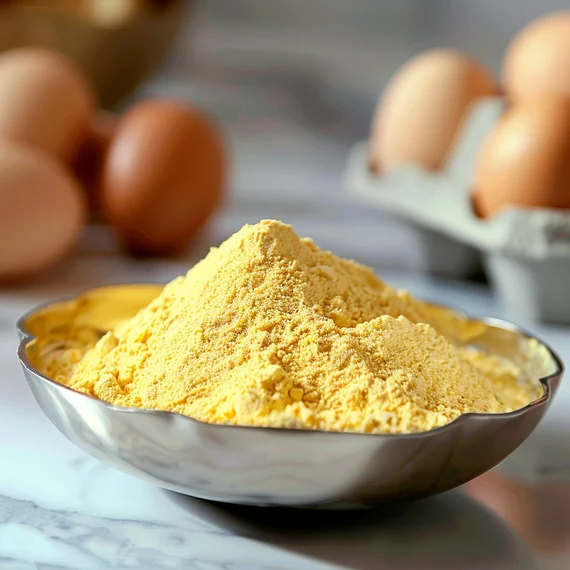
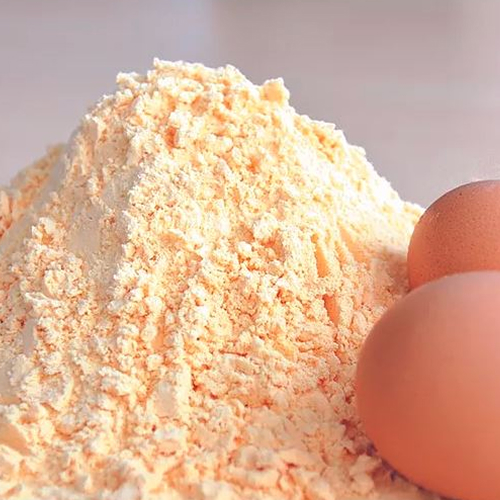
Egg powder is designed for processes where shelf life, storage efficiency, and dry logistics are especially important. Dry egg products are produced by removing water from liquid egg, typically through spray drying, while protective packaging helps shield the product from moisture and external contamination. This format allows manufacturers and professional kitchens to retain the functional properties of egg in a more stable and convenient form.
For food production and operational kitchens, egg powder simplifies preparation, removes shell waste, and provides an ingredient that is easy to dose and handle. It is widely used as a ready-to-use solution in applications where consistency, cleanliness, and process efficiency matter.
Another important advantage is better control over waste and product losses. Compared with shell eggs or some liquid formats, powdered egg products can help reduce write-offs caused by short shelf life, packaging residue, or unused product. This makes them a practical option for businesses that need tighter control over stock management and ingredient costs.
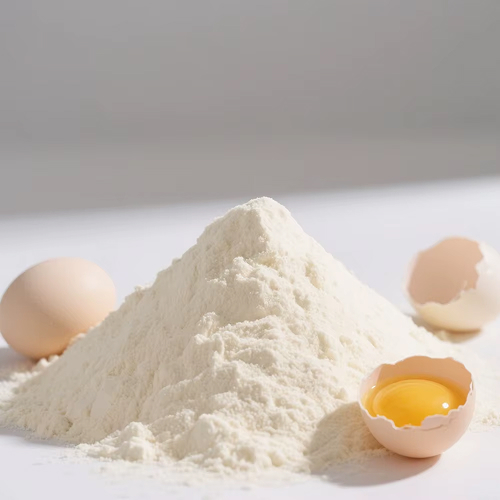
The product range is usually structured by function as well as by egg type. Standard categories include whole egg powder, egg white powder, and egg yolk powder, while specialized solutions and custom blends can be developed for specific production technologies. Some egg white powders are designed for foaming applications such as confectionery masses, while others are intended for gelling functions that support product structure.
Storage conditions are based on one key principle: dry products must be protected from moisture. Unopened dry egg products are commonly stored in cool, dry conditions, while opened packaging is typically best kept refrigerated. Reconstituted product should be used promptly according to handling recommendations and product specifications.
Shelf life depends on packaging and storage conditions, but dry egg products are often selected because they offer extended storage potential. In industrial supply, shelf life may reach up to 24 months depending on the specific product format and manufacturer specification. Packaging can be adapted for both professional kitchens and industrial-scale food production.
Why you should choose us
Benefits
Why you should choose egg powder
01
Extended shelf life and easy storage
Egg powder is ideal for operations where long shelf life and efficient storage are essential. Compared with more perishable egg formats, it offers a practical solution for stock planning, dry warehousing, and long-distance supply. This makes it especially valuable for industrial production and large-volume purchasing.
02
Ready-to-use and easy to dose
Dry egg products simplify production by removing shell handling, reducing preparation steps, and providing a clean, measurable ingredient. Their format makes them easy to portion, mix, and integrate into recipes and manufacturing processes where consistency and speed are important.
03
Functional solutions for different applications
Egg powder is available in several forms, including whole egg, egg white, and yolk powder, as well as specialized options developed for specific technological functions. Depending on the application, products can support foaming, gelling, emulsifying, or structural performance in bakery, confectionery, sauces, and processed foods.