
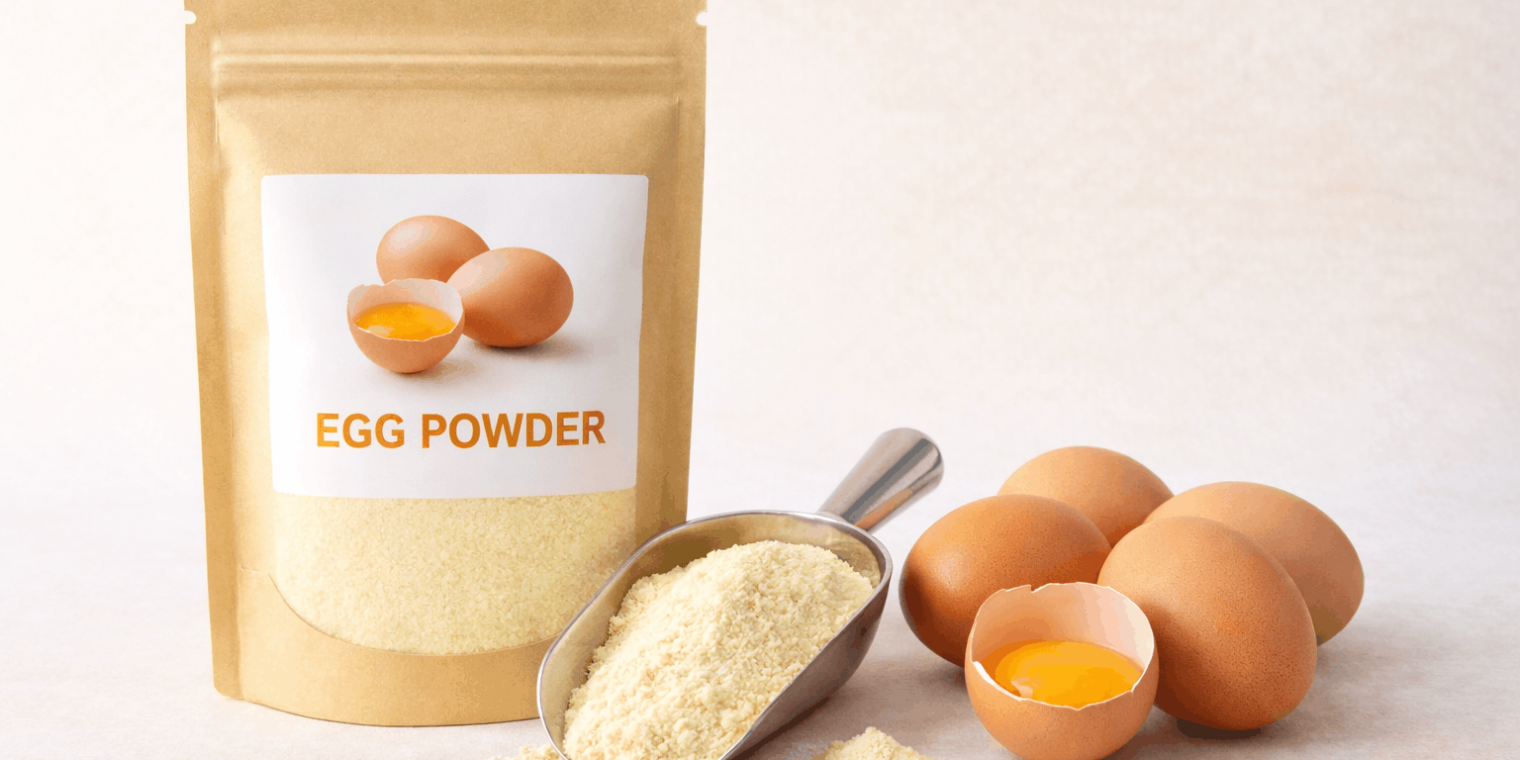
Spray-dried egg powder with long shelf life and consistent functionality
Spray-dried egg powder is a widely used ingredient in modern food production. It provides the functional and nutritional benefits of eggs in a stable, dry format that is easier to store, transport and use in large-scale manufacturing. For bakeries, food factories and prepared food producers, egg powder offers reliability, long shelf life and consistent technological performance.
By removing moisture from liquid eggs through controlled drying processes, manufacturers create a concentrated ingredient that retains the key properties required in food production. Because of its stability and versatility, spray-dried egg powder has become an essential component in many industrial food applications.
Production Process
The production of egg powder begins with high-quality fresh eggs. The eggs are cleaned, inspected and mechanically broken in specialized processing equipment. Depending on the product specification, the eggs may be processed as whole eggs or separated into yolk and egg white.
The liquid egg mixture is filtered to remove shell particles and other impurities. It then undergoes pasteurization, a heat treatment that eliminates harmful microorganisms and improves food safety. Pasteurization is carefully controlled to preserve the proteins responsible for the functional properties of eggs.
After pasteurization, the liquid egg enters the spray-drying stage. During this process the liquid is atomized into very small droplets and introduced into a chamber with hot air. Moisture evaporates almost instantly, leaving behind a fine powder composed of concentrated egg solids. The powder is then cooled and packaged in moisture-protected containers to maintain product quality.
Long Shelf Life and Storage Advantages
One of the primary advantages of spray-dried egg powder is its long shelf life. Because the drying process removes most of the water, the product has very low moisture content. This significantly reduces microbial growth and slows chemical degradation.
When stored in sealed packaging under dry conditions, egg powder can remain stable for many months without losing its functional properties. This makes it particularly valuable for food manufacturers that require dependable ingredient storage and long-term inventory planning.
Egg powder also simplifies logistics. Compared with fresh eggs or liquid egg products, the powder requires less storage space and does not require refrigeration during transportation. This reduces storage costs and allows manufacturers to maintain large ingredient reserves without expanding cold storage capacity.
Consistent Functional Performance
In industrial food production, ingredient consistency is essential. Spray-dried egg powder provides reliable performance in a wide variety of applications because it is produced under controlled processing conditions.
Egg powder retains the natural proteins and lipids responsible for the functional roles of eggs in food preparation. These functions include binding ingredients, stabilizing emulsions, forming foams and improving texture. Because the product is standardized, food manufacturers can rely on predictable behavior in every production batch.
When needed, egg powder can be easily reconstituted by mixing it with water in the appropriate ratio. The resulting liquid performs similarly to fresh eggs in many recipes. This flexibility allows manufacturers to use the ingredient either as a dry component in premixes or as a liquid ingredient in automated production systems.
Applications in the Food Industry
Spray-dried egg powder is used in many segments of the food industry. Bakeries rely on it for cakes, cookies, pastries and bread where eggs contribute structure, moisture and color. In confectionery production it is used in products such as marshmallows, meringues and fillings due to its ability to create stable foams.
Sauce and dressing manufacturers use egg powder because egg proteins act as natural emulsifiers that stabilize mixtures of oil and water. Pasta producers incorporate egg powder to achieve the desired texture and flavor profile. The ingredient is also widely used in instant foods, dry mixes and ready-meal production where shelf-stable components are required.
Operational Efficiency for Manufacturers
Using egg powder simplifies many aspects of food production. Factories do not need to manage shell waste or perform manual egg breaking. The powdered ingredient can be precisely measured and added directly to mixing systems, reducing preparation time and improving process control.
Dry egg products also reduce the risk of contamination from shell fragments or improperly handled raw eggs. Combined with pasteurization during processing, this contributes to improved hygiene standards in industrial kitchens and food manufacturing environments.
Quality Control and Safety
Modern egg powder production is supported by strict quality assurance procedures. Each production batch is tested for microbiological safety, moisture content, solubility and protein functionality. Producers also monitor color, taste and consistency to ensure the ingredient meets the requirements of food manufacturers.
Packaging plays an important role in maintaining product quality. Moisture-resistant containers and sealed storage conditions protect the powder from humidity and contamination. Proper storage ensures that the functional and nutritional properties remain stable throughout the product’s shelf life.
Conclusion
Spray-dried egg powder combines the natural functionality of eggs with the stability required in modern food manufacturing. Its long shelf life, consistent performance and efficient storage make it a valuable ingredient across many sectors of the food industry. By providing a reliable alternative to shell eggs and liquid egg products, spray-dried egg powder helps manufacturers maintain stable production processes while delivering high-quality food products to the market.